

 by Mindtools
Celebrating Pride and building an inclusive future
An Interview with Adrian Winter by Melanie Bell, Mindtools Senior Editor
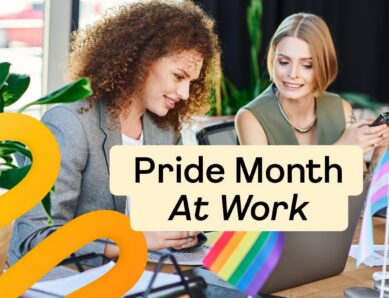
To mark the start of Pride Month, read Melanie Bell’s interview with Adrian Winter. He shares his thoughts on what Pride means to him, what individuals and organizations can do to support LGBTQ team members, and how to create more inclusive workplaces.
We hope you enjoy reading the interview, and happy Pride Month!
MB: Can you tell me a little bit about yourself and your background?
AW: I’m Adrian (he/him), a conference producer working in climate-related industries. Mostly in municipal water, but I also worked on Climate Week NYC and helped launch DC Climate Week.
Beyond that, I volunteer with my local queer community, lending my organizational and project-management skills where I can.
Oh, and I’m trans. 😊
MB: June is Pride Month. What is Pride, and why is it important for workplaces to consider?
AW: Pride is a protest.
It’s a refusal to accept erasure and discrimination against LGBTQ+ people. More concretely, it marks the moment in 1969 in New York City when a group of queer people fought back against a discriminatory police force’s raids.
While Pride has become more of a celebratory festival, recent rollbacks of civil rights are reminding us why Pride is still necessary.
MB: What are some of the biggest challenges facing LGBTQ+ employees and leaders at work today?
AW: Very vocal minorities have systematically eroded civil rights for the queer community, especially trans people. While largely based on cherry-picked and outright incorrect information, it’s still been a successful campaign. Recently, activist organization Stonewall found 36 percent of employees have heard negative or discriminatory remarks about LGBTQ+ colleagues.
When jobhunting, we’ve no way of knowing whether an employer genuinely is inclusive, or if they display that messaging because they’re legally obliged. It’s why almost 40 percent of LGBTQ+ employees hide their identities at work.
MB: What strengths do these individuals bring to organizations that others may not?
AW: Companies that embrace diversity in their workforces regularly outperform their competitors, with higher revenues, market values, and stock returns.
Non-discriminatory workplaces attract top talent and benefit all employees, regardless of gender, sexuality, race, etc. There’s less turnover and greater innovation due to the exchange of fresh ideas that freedom of expression encourages.
(Not to mention the LGBTQ+ community boasts an estimated $4.7 trillion in global purchasing power. And we do tell each other which companies discriminate.)
MB: Have you personally experienced any challenges at work related to your identity? If so, what did you find helpful in navigating them?
AW: I’m lucky. Since transitioning, I’ve only worked with organizations that prioritize inclusivity. However, one time I was in the men’s toilets and the cleaning staff insistently directed me to the women’s. When HR found out, they immediately ensured the cleaning company received relevant training and offered me support, but I still exclusively use unisex toilets now.
I do this because outside of those I work closely with, people aren’t going to know my situation, and it’s not appropriate to send out a company-wide email telling staff there’s a trans person in their midst. A well-trained HR department is crucial.
MB: Ours is an international audience. How do these dynamics differ across cultural contexts?
AW: There are still 65 countries that criminalize LGBTQ+ people, including 12 that impose the death penalty. So I think the most important thing to remember is that these aren’t just “workplace dynamics.” There are places all over the world where even office “banter” can place us in very real danger, even if the threat isn’t codified in law.
It’s essential to consider this when safeguarding employees during business travel and when opening offices in those jurisdictions. How will you make sure that someone doesn’t “tip off” authorities about another employee? What will you do to create a culture where homophobic/transphobic behavior is unthinkable?
MB: What can organizations do to support LGBTQ team members?
AW: Make explicitly stating pronouns second nature. When cisgender people (who identify with their gender assigned at birth) provide their pronouns in their email signatures, on name badges, or in meeting introductions, it means trans employees don’t automatically out themselves by doing so.
Use colleagues’ correct pronouns in front of external parties.
Provide a dedicated unisex toilet, where possible. For many trans and gender nonconforming (GNC) people, the availability of suitable, discreet toilets dominates our public lives.
Train roles that handle personal information, like HR, payroll, and travel, on discreetly handling “deadnames” (a person’s old name, as opposed to the one they use), legal gender markers, etc.
Research workplace equity and hire DEI officers. Give those officers real power to fulfil their responsibilities.
Lastly, do more than just creating these policies. When you walk the walk, you clearly demonstrate an inclusive culture. Go ahead and tell people your pronouns, even if it feels obvious (it isn’t!).
MB: What changes would you like to see going forward?
AW: I’d like to see corporate support beyond handing out rainbow-branded merch during Pride Month. Where parental leave and health insurance reflect diverse family structures, CVs and résumés with pronouns aren’t cast aside because it might be “awkward,” and companies refuse to do business in regions with governments that discriminate against us. Sure, sponsor that Pride parade float, but also consider regular contributions to groups that advocate for our civil rights.
MB: Thank you for your time! Do you have any final words for our readers?
AW: We’re just people, same as you. Talk to us the way you would any other colleague (including not asking us things you wouldn’t ask others). Start with that, and you’ll avoid treating interactions with queer people like first contact with an alien species.
And if you don’t know/remember our pronouns, it’s okay to ask!
What’s Next?
Looking to make sure your workplace models genuine inclusion? Check out our Tips for Creating an Inclusive Culture.
Our article on inclusive leadership will help you embody inclusive traits in your managerial style.
And Grace Mosuro’s video will help you establish a culture where everyone feels that they belong.


