

- Content Hub
- Business Skills
- Business Ethics and Values
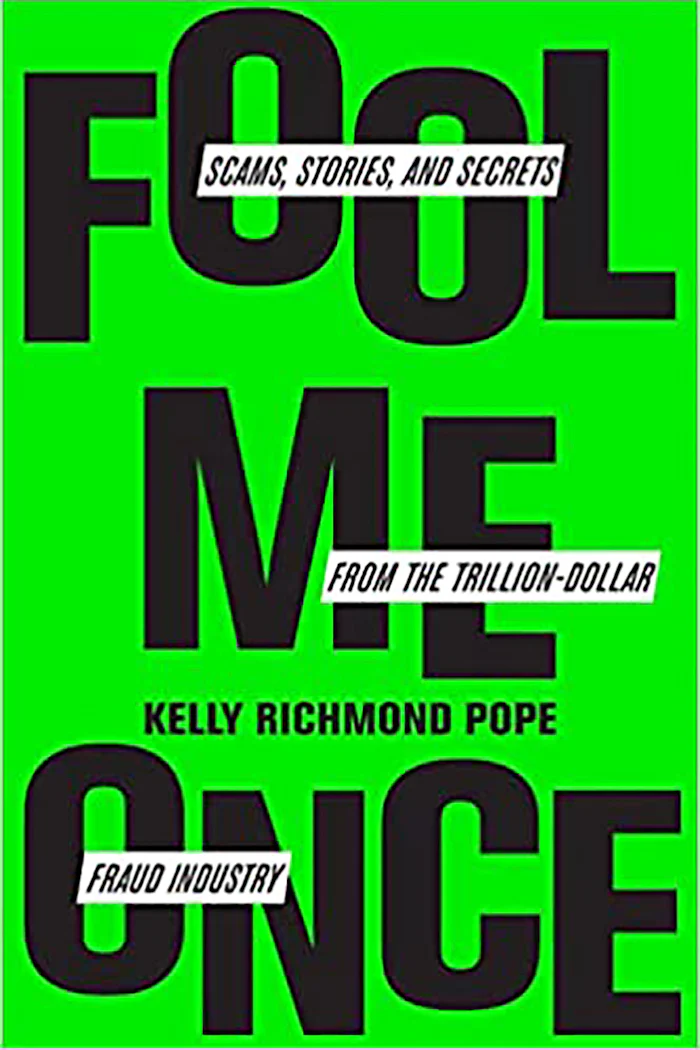
- Fool Me Once: Scams, Stories, Secrets from the Trillion-Dollar Fraud Industry
Fool Me Once: Scams, Stories, Secrets from the Trillion-Dollar Fraud Industry
by Our content team
Access the essential membership for Modern Managers
Transcript
Hello, I'm Cathy Faulkner.
In this Book Insight, we're looking at "Fool Me Once," subtitled "Scams, Stories, and Secrets from the Trillion-Dollar Fraud Industry," by Kelly Richmond Pope.
Most of us have been impacted by fraud at some point, whether we've received a phishing email or stayed in sketchy accommodation that wasn't what it was promised to be. We may even have committed it. Have you ever submitted a timesheet or expense report that was exaggerated a bit?
These may be small examples, but they're fraud. And if you want to be smart about protecting your money, or if you're handling funds on an organizational scale, it pays to be vigilant. It's hard to predict or prevent fraud, but awareness can help – and that's where this book comes in.
Pope teaches forensic accounting at DePaul University in Chicago, and researches white-collar crime. She made a documentary film, "All the Queen's Horses," about the case of Rita Crundwell, a city comptroller in Dixon, Illinois who stole $53 million of public funds. Her fascination with this story is one of the things that led her to write this book.
All organizations have colleagues most people trust. And in some cases, for various reasons, these colleagues betray everyone. Pope writes that everywhere she does a presentation on fraud, she's approached by someone who wants to share their personal experience with it. "Fool Me Once" is a way of sharing experiences and awareness with a wider audience.
Pope wants her students, and readers, to see themselves in the fraud stories she shares. She wants people to understand the reasons behind different types of fraud, to empathize, and to question their biases.
So keep listening to find out about the "Fraud Triangle," the reasons people commit, fall for, or call out fraud – and what you can do to be vigilant.
In the introduction, Pope shares a childhood story about her mother telling her to mind her own business when her brother committed a transgression. As an adult, she has a different definition of minding your business – she believes that people should be alert. If they see something wrong, they should speak up.
"Fool Me Once" looks at such whistleblowers in detail, as well as fraud victims and perpetrators of fraud – or "perps" – and the book starts with this third group.
Rita Crundwell is a good example of what Pope calls an "intentional perp." That's someone who commits fraud on purpose. They want to make money, and they rationalize their decisions, thinking the rules don't apply to themselves. They tend to be intelligent, charming and narcissistic.
Let's look at Rita Crundwell's example. She worked in a small town and had total control of its finances. She was in charge of seven bank accounts for the City of Dixon. She set up another account that no one knew about, created invoices for fake projects, and moved money from the city's capital development fund to this account. She then spent the funds on personal indulgences, like breeding racehorses. She owned over 400 of them, spread across multiple ranches.
Some people in town had questions about her money, and the answers they were given varied. But people trusted Rita – until city clerk Kathe Swanson asked the bank for information on all of Crundwell's accounts, and she learned about the private account with all its illicit deposits. She reported this to her supervisor, the mayor, and an investigation followed.
Most organizations have a Rita – an employee everyone trusts, who might not deserve that trust. Having checks and balances in place is important to prevent abuses of trust. If an organization lets one person control the purse strings, it makes itself vulnerable to fraud.
Rita is far from the only intentional perpetrator. Pope shares the story of a pharmacist, Robert Courtney, who began diluting his prescriptions to save money. While Rita stole an immense amount of money from her community, Robert was directly responsible for cancer patients' early deaths. All in all, he diluted prescriptions for 4,200 patients, all to pay his debts to his church and the IRS.
Why do intentional perpetrators commit fraud? Often, because they're desperate. Pope describes a model called the "Fraud Triangle," which states that three things are behind every fraud: opportunity, rationalization and pressure.
Most fraud is committed by intentional perps. They're the people who feel they can get away with anything. Their skills and risk-taking attitude are valued in business, but it's these same traits that mean they might pull the wool over our eyes if given the opportunity.
But not all fraud perpetrators are this arrogant. "Accidental perps" don't set out to commit fraud. Instead, they're in a position to benefit from someone else's error. They might not even realize that fraud has occurred.
Pope shares an example from her personal life when she ordered an expensive handbag and a second one was sent by accident. If she had kept both handbags, she would have been committing fraud – an accidental perpetrator who took advantage of the company's mistake. Even more so if she had gone on to sell the second handbag and reap a profit.
While intentional perps hold a high level of power, accidental perps usually hold lower-level positions in organizations. They might be "people pleasers" or follow orders even when they don't feel right. If they rationalize their actions, it's often by putting the blame on others. Accidental perps are usually more introverted, too, with traits that Pope describes as "vulnerable narcissism."
A typical example is Andy Johnson, VP of finance at a gas company called Nicor Energy. He had to either underestimate or overestimate the money that his customers would owe. Because the company needed revenue, he overestimated. When gas prices went up, the company lost a lot of money.
Andy's higher-ups weren't interested in his attempts to explain the problem. They just wanted him to fix it. So he left a $2 million loss unreported. An external audit found the problem, and Andy got fired. But he didn't know he'd done anything illegal – until the FBI turned up, and he was imprisoned for his attempts to keep his employers happy.
Fraud can also be committed by "righteous perps." These are the Robin Hoods of the world, who rationalize their crimes because they're using the money to help someone else. Take the example of Robert Smith, a CEO who paid the student loan debt of over 400 college graduates, using income he failed to report.
Righteous perps are the category that people empathize with most. We love to see the underdog win. Many of us are fascinated by Edward Snowden, the American National Security Agency contractor who leaked classified information to the media for the good of his country, an action that resulted in legal reforms. Other righteous perps take action for the sake of their communities or families. They're motivated by a sense of justice and seldom feel bad about their actions. Don't be surprised if others support them, too.
Clearly, people have very different reasons for committing fraud. And fraud victims are a diverse bunch, too. Pope named her book after the saying, "Fool me once, shame on you. Fool me twice, shame on me." In other words, we all fall for things sometimes, but we need to watch our backs.
It's easy to dismiss fraud victims as greedy, gullible or stupid. Sometimes they are. Sometimes they aren't. One category of prey, as Pope calls fraud victims, is the innocent bystander. In Rita Crundwell's case, these were the residents of Dixon who weren't aware that fraud was being committed. We all fall into this category sometimes. We trust that the system will work – but sometimes it doesn't. It's hard to protect ourselves against a threat that we don't know about and can't anticipate.
Have you ever had a scam call? Watch out for red flags, lest you become a fraud victim. The author shares an example of getting a fake call from the IRS, and lists some signs to look out for, such as the lack of a written notice, a caller ID that didn't match up, and a request for payment. Sometimes there are signs that can alert you to the presence of a scam.
But in other cases, such as the author buying concert tickets that the reseller had sold to multiple people, there aren't any clear red flags that something's wrong. How can you safeguard yourself against such threats, Pope asks. You can't. Anyone can become an innocent bystander.
Organizations, too, can fall victim to fraud, usually caused by a key person the organization depends on. Rita Crundwell is one example of a person in power who scammed her employer. Organizations can fall victim to perpetrators who are intentional, accidental or righteous. These people know how the system works. They can spot weaknesses in internal control and take advantage of them.
In one insightful example, the accountant for a construction company committed check fraud, and her boss noted that it could probably have been prevented if she'd been paying more attention to the finances. Forty percent of organizational fraud is caused by insiders, and it can happen at all levels of an organization. So it's important to pay attention and have controls in place, no matter how much a supervisor trusts their employees.
Finally, the book describes two types of whistleblowers. Whistleblowers are controversial: often public opinion turns against them and they get labeled tattletales or snitches. They may be ostracized, harassed, or lose their jobs. But Pope maintains that they're heroes.
Whistleblowers speak up when they see unethical behavior. In some cases, they're not directly involved in the situation. They take a stand because they witness something that goes against their values – so much that they can't bear to stay silent. It's a courageous act. Although whistleblowers may suffer consequences for their actions, they usually say they'd do the same thing all over again.
As with perpetrators and prey, there are multiple types of whistleblowers operating from different motives. "Accidental whistleblowers" aren't looking to get involved. They stumble onto wrongdoing and feel duty bound to report it. Most whistleblowers are accidental.
"Noble whistleblowers," on the other hand, are invited to participate in the wrongdoing. So they're directly risking something when they call attention to it. Like their accidental counterparts, they act in pursuit of fairness.
"Vigilante whistleblowers" are the most publicly visible kind: the individuals who speak up against systems. A good example of this type of whistleblower is Erin Brockovich, who exposed and challenged Pacific Gas and Electric Company's contamination of drinking water in California. This type of whistleblower often faces legal action and is unafraid of publicity. All the better to draw attention to the injustice they're calling out. They're more likely to emerge in organizations that have clear reporting procedures for wrongdoing.
Take the case of the University of North Carolina, where student athletes were being funneled into fake courses in order to maintain their academic standing and bring in money for the school. Learning specialist Mary Willingham called the system out for failing to educate student athletes and ensure they met academic standards. The university went on probation, but eventually it was decided that no rules were broken and nothing was done about the issue.
In some cases, a perpetrator feels guilty and blows the whistle on a fraud scheme they took part in. Some of them do so in response to incentives to come forward. So it helps for organizations to offer these incentives, along with methods for employees to report wrongdoing.
"Fool Me Once" is rich in case studies and human stories. It looks at fraud from all sides of the equation. And there are enough relatable anecdotes for readers to understand why different types of people commit, fall for, or call out fraud. Most of us will see ourselves in some of these stories. And other stories might open our eyes to red flags to watch out for.
Pope is American, and her examples are U.S.-centric. It would be useful to have more global examples of fraud. But the featured case studies are rich in detail, and successful in showing the parties involved in fraud as multi-dimensional people. Plus, the author's own personal examples show how fraud can play out on a smaller and very relatable scale.
There are a few text boxes sprinkled amid the main text. For example, Pope includes a worksheet where you rate how you'd respond to different scenarios where someone might become an intentional or accidental perpetrator of fraud. These are often insightful, but occasionally silly, such as when Pope notes her own just-for-fun red flags to watch out for when it comes to perpetrators. Some of her triggers, such as not trusting anyone who doesn't like dogs, may be entertaining, but they have little to do with fraud!
Each chapter ends with a summary of key points, and these are useful in guiding readers through the book.
It's also helpful to have the inclusion of signs to watch out for when it comes to noticing fraud. There are some good guidelines here, and it's eye-opening to consider how basic checks and balances can make a difference. Perhaps the information on what to watch out for could be even more granular – but that would be a different book.
All in all, "Fool Me Once" succeeds as a useful guide and a fascinating compendium of what people try to get away with – and why. We recommend it to general readers as well as anyone who handles finances on a larger scale.
"Fool Me Once: Scams, Stories, and Secrets from the Trillion-Dollar Fraud Industry," by Kelly Richmond Pope, is published by Harvard Business Review Press.
That's the end of this episode of Book Insights. Thanks for listening.


